
Facelift in Bellevue
Facelift surgery in Bellevue with Albert Yang, MD is a structural rejuvenation of the lower two-thirds of the face — the cheeks, the jawline, and the upper neck.
 [ PROCEDURE · OVERVIEW ]
 What is Facelift in Bellevue?
A facelift — also called rhytidectomy in surgical literature — addresses the visible signs of aging in the mid-face, jawline, and upper neck by repositioning the deeper tissues that have descended over time and removing the modest amount of redundant skin that results. It does not pull the face tight; a well-designed facelift restores facial volume to where it sat a decade or two earlier and lets the skin redrape naturally over that re-supported framework.
The clinical anatomy that drives the procedure sits below the skin. The superficial muscular aponeurotic system (SMAS), the deep facial ligaments, the platysma in the neck, and the underlying fat compartments all shift downward and inward with age, gravity, and volume loss. Surface treatments — topical regimens, fillers, and energy devices — cannot address that deep descent. The facelift is the surgical answer to a structural problem.
At the Bellevue practice, "facelift" is treated as a category that includes several specific techniques, each chosen based on the patient's anatomy and goals. Dr. Yang offers the Deep Plane Facelift, the SMAS Facelift, and the Mini Facelift within the broader Face procedures menu. Most consultations begin with an examination of the deep tissues and end with a recommendation for whichever technique best fits the patient — not a one-size-fits-all approach.
Ideal Candidates
The strongest facelift candidates share a few specific anatomical and health-related characteristics. They have visible jowl formation along the jawline, descent of the malar fat pad and mid-face, softening of the cervicomental angle in the neck, or marionette lines that don't respond to non-surgical treatment. They are in good general health, do not smoke (or are willing to stop well in advance of and after surgery), and have realistic expectations grounded in their own anatomy rather than another person's outcome.
Most facelift patients are in their forties through their seventies. The procedure is not the right answer for someone in their thirties whose primary concern is volume loss — that pattern is usually better addressed with Facial Fat Transfer or non-surgical care. It is also not the right answer for someone whose dominant concern is forehead heaviness or hooded upper eyelids; those patterns are addressed by brow lift and eyelid surgery, sometimes alongside a facelift, sometimes alone.
Equally important is who is not a candidate. Patients with uncontrolled hypertension, bleeding disorders, untreated obstructive sleep apnea, active tobacco use, or unrealistic expectations about what surgery can change should not undergo a facelift until those issues are addressed or the goals are recalibrated. Dr. Yang's consultation includes a candid review of medical history, a physical examination of facial anatomy, and a frank conversation about whether surgery is the right answer at this point in time. Some consultations end with a recommendation to wait, to address a different concern first, or to choose a less invasive procedure.
The Procedure & Technique
The Bellevue practice's approach to facelift surgery is structural. The skin is the last thing operated on; the heavy lifting happens beneath it. While the specific technique chosen depends on the patient's anatomy, Dr. Yang's general approach mirrors the modern deep-plane and extended-SMAS principles that have become standard in fellowship-trained facial plastic surgery.
Surgery is performed under general anesthesia or deep sedation in an accredited surgical facility, typically as an outpatient procedure. Incisions are designed to follow natural anatomical contours: along the temporal hairline, in front of the ear hugging the natural ear-skin junction, around the earlobe, and behind the ear into the post-auricular hairline. A small submental (under-chin) incision is added when the neck is being addressed simultaneously, which is the case in most modern facelifts.
Once the skin is elevated, the work shifts to the SMAS and the deep ligaments. In a deep-plane technique, the SMAS is released along with the underlying facial ligaments — the zygomatic, masseteric, and mandibular cutaneous ligaments — so the entire mid-face composite can be repositioned vertically as a single unit. In an extended-SMAS or SMAS plication technique, the SMAS layer is sutured or repositioned without the same depth of ligament release. The choice depends on what the patient's anatomy requires.
In the neck, the platysma muscle is addressed through the submental incision. A platysmaplasty — central reapproximation of the platysma — is commonly performed to redefine the cervicomental angle and reduce vertical banding. Subplatysmal fat and digastric muscles may be contoured when indicated. The skin is then redraped — without tension — and trimmed conservatively, with closure in fine layers to minimize scarring along the incision lines.
Operative time for a standard facelift typically runs 4 to 6 hours; combined facelift and neck lift cases run longer. Patients go home the same day with a soft compressive dressing in place.
Recovery & Timeline
Recovery from facelift surgery is staged. Patients should plan for a meaningful recovery rather than minimizing it; the structural work performed during a facelift requires the deep tissues to heal in their new position, and shortcuts in recovery are visible later.
Days 1–3. Bruising and swelling peak in the first 48 to 72 hours. Patients sleep with the head elevated, apply cold compresses intermittently, and limit activity to walking around the home. A soft compressive dressing is typically removed at the first post-op visit on day 1 or 2 and replaced with a lighter elastic garment worn intermittently for 1–2 weeks. Pain is usually moderate and managed with non-opioid analgesics and a short course of opioids if needed.
Week 1. Sutures along the hairline and behind the ear are typically removed at 5–7 days. Most patients are off all narcotic medication by the end of the first week. Bruising begins to migrate downward and yellow; swelling remains noticeable but is no longer the dominant feature.
Weeks 2–3. Most patients return to office-based work and light social activity in 10–14 days, though residual swelling and tightness persist. Camouflage with hair and makeup is usually feasible by this point. Strenuous exercise is still restricted.
Weeks 4–6. Swelling continues to resolve; the new contour begins to emerge. Cardio exercise is generally cleared at 4 weeks; weight training and high-impact activity at 6 weeks. Sun exposure on incision lines must be avoided.
Months 3–6. The final result continues to refine as deep-tissue swelling resolves and incision lines mature. Most patients consider their appearance "out of recovery" by 8–12 weeks; the result continues to improve subtly through 6 months and beyond.
A practical note on planning: most patients in Bellevue and across the Eastside take 2 weeks off from work for facelift surgery. Patients in client-facing or on-camera roles often plan 3–4 weeks before high-visibility commitments.
 [ EXPECTED RESULTS ]
 Expected Results
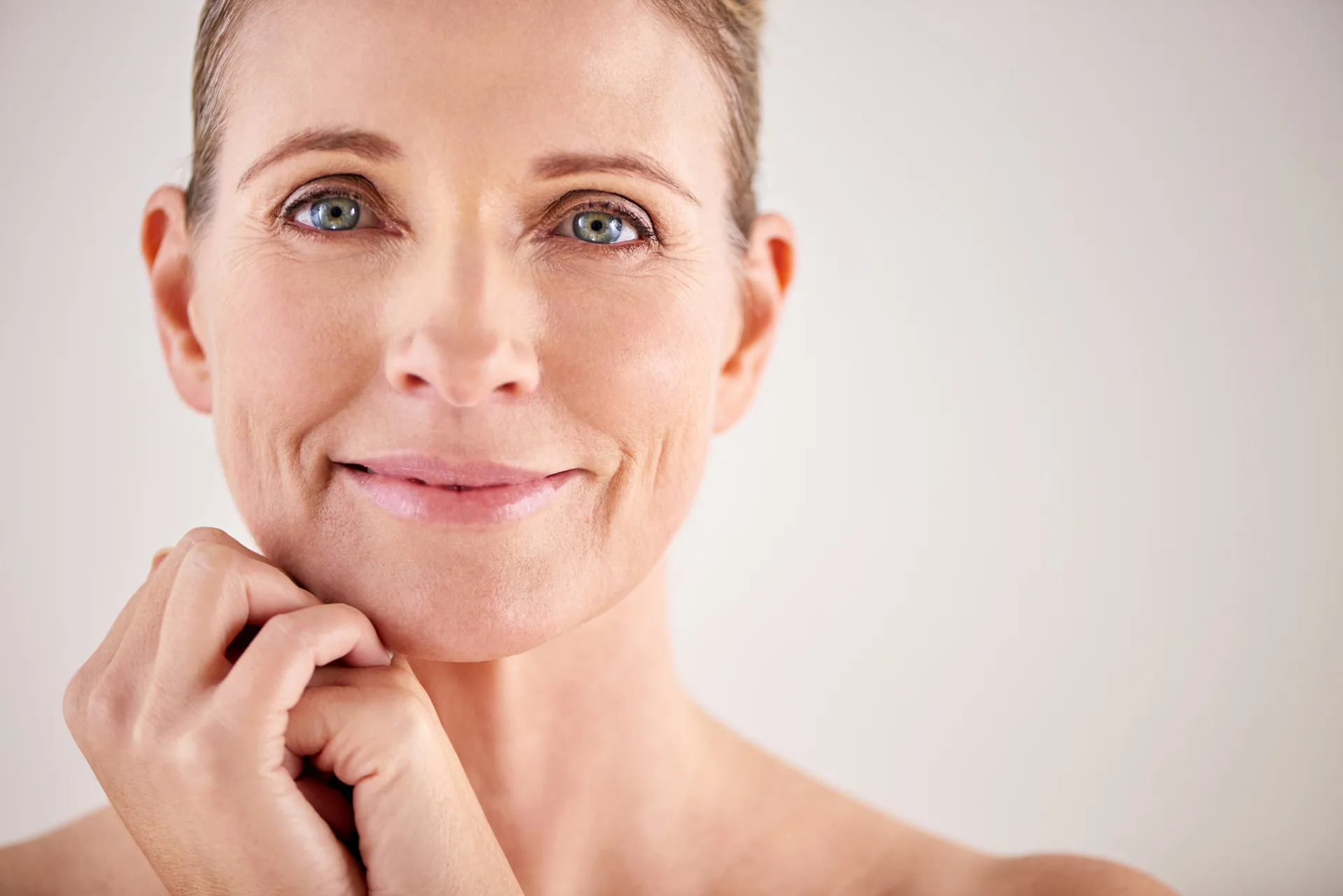
A well-performed facelift restores the facial structure of approximately 8 to 12 years earlier. Jowls are reduced or eliminated, the jawline is redefined, the cervicomental angle is restored, and the mid-face composite sits where it sat before age-related descent began. The skin redrapes naturally over this re-supported framework rather than being pulled taut, which is what produces a result that reads as rested rather than operated.
Longevity is one of the reasons patients choose a structural facelift over less-invasive options. The deep-tissue repositioning performed in the procedure is durable; the face will continue to age, but it ages from the new starting point. Most patients see results that hold meaningfully for 8 to 10 years and continue to enjoy a "younger than my baseline" appearance well past that. Skin quality, sun exposure, weight stability, and genetics all influence how the result evolves over time.
The result is not static and not a freeze-frame of youth. It is a re-set of the structural baseline. Patients who pair surgery with consistent skin care, sun protection, and weight stability tend to be the most pleased with their long-term outcome. View before-and-after results for visual reference; outcomes vary by individual anatomy.
Risks & Considerations
Every surgical procedure carries risk. Facelift surgery is generally considered safe when performed by a fellowship-trained facial plastic surgeon in an accredited facility, but a candid review of risks is part of every consultation at the Bellevue practice.
Common, expected, and self-resolving: bruising, swelling, temporary numbness in the cheek and pre-auricular skin, tightness, and itching as nerves regenerate. These are normal sequelae and are not properly described as complications.
Less common but recognized risks: hematoma (collection of blood under the skin) is the most common true complication of facelift surgery and is typically managed with prompt drainage when it occurs. Other recognized risks include seroma, delayed wound healing, hypertrophic scarring, asymmetry requiring revision, hairline displacement, and earlobe distortion.
Rare but serious risks: injury to branches of the facial nerve, which can produce temporary or, rarely, permanent weakness in facial movement; infection; skin necrosis (most strongly associated with smoking and tension at the closure); and complications related to anesthesia.
Smoking and nicotine of any kind — cigarettes, vaping, nicotine patches, chewing tobacco — are the single largest modifiable risk factor for facelift complications. The Bellevue practice requires a verified smoke-free interval before and after surgery for any patient with a nicotine history.
A facelift is a cosmetic procedure when done for aesthetic reasons. It is not covered by insurance, and revision surgery — when needed — is the patient's responsibility unless otherwise discussed in the surgical agreement.
Questions about Facelift in Bellevue?
Talk with Dr. Yang.
Frequently Asked Questions
How long does a facelift take to perform?+
A standard facelift performed at the Bellevue practice typically runs 4 to 6 hours of operative time, depending on whether neck surgery is being performed simultaneously and whether the technique is a SMAS or deep-plane approach. Combined facelift and neck lift cases are common and run on the longer end. Patients arrive in the morning, undergo surgery, recover from anesthesia, and go home the same day with a soft compressive dressing in place.
When can I return to work after a facelift?+
Most patients planning a facelift in Bellevue take 2 weeks off from work and return to office-based or remote roles in 10 to 14 days. Patients in client-facing, on-camera, or high-visibility roles typically plan 3 to 4 weeks before significant public commitments, since residual swelling and minor bruising can persist into the third week. Strenuous exercise is restricted longer — typically 4 to 6 weeks — to protect the deep-tissue healing.
Will my facelift look natural, or will it look pulled?+
A modern, structurally based facelift restores the deep facial framework rather than tightening the skin. The skin redrapes naturally over the repositioned SMAS and ligaments, which is what produces a rested rather than operated appearance. The "pulled" look associated with older facelift techniques came from skin-only lifting that placed tension on the wrong layer. Dr. Yang's approach is anchored in the deep tissues, with skin closed without tension.
How long does a facelift last?+
Most patients see meaningful results that hold for 8 to 10 years, with subtle continued benefit beyond that. The face continues to age after surgery, but from the new structural baseline established by the procedure. Skin quality, sun exposure, weight stability, and genetics all influence longevity. Some patients ultimately return for a refresh after a decade; many do not.
Is a facelift painful?+
Most facelift patients describe the post-operative discomfort as moderate rather than severe, and dominated more by tightness and pressure than sharp pain. Pain is typically managed with non-opioid analgesics and a short course of opioids in the first 2 to 4 days when needed. Most patients are off narcotic medication by the end of the first week.
Can I combine a facelift with other procedures?+
Combined procedures are common at the Bellevue practice. The most frequent pairings include facelift with neck lift, facelift with upper or lower eyelid surgery, and facelift with brow lift. Combining is often more efficient — single anesthesia, single recovery — and lets the surgical plan address the face as a whole. Whether to combine is a candidacy question reviewed in consultation.
How do I know which type of facelift is right for me?+
The decision among deep plane, SMAS, and mini facelift depends on the depth of descent in your facial tissues, the elasticity of your skin, your goals, and your tolerance for recovery. A Bellevue consultation includes a structural examination of the face, a discussion of which technique best fits your anatomy, and a candid review of trade-offs. Some patients are best served by a less-invasive option than they expected; others need more.
Serving Bellevue & the Eastside
Serving patients across the Eastside
Bellevue+
For Bellevue patients, the facelift procedure is performed locally at 15600 NE 8th St, Suite A-8 — drive time from anywhere within Bellevue is essentially zero. That proximity matters most in the first two weeks after surgery, when several short post-operative visits are typical: dressing change, suture removal, and a one-week follow-up. Bellevue patients can also coordinate the pre-op consultation, surgery day, and immediate recovery without travel logistics, which makes scheduling a 2-week recovery window meaningfully easier than it is for out-of-area patients.
Clyde Hill+
Clyde Hill patients reach the Bellevue clinic in roughly 5 to 8 minutes via 92nd Avenue NE and NE 8th Street. That proximity is convenient for facelift patients who need to attend multiple short post-operative visits during the bruising-and-swelling phase of recovery. Some Clyde Hill patients prefer to handle the consultation and pre-operative imaging in person and the routine follow-up via virtual visit; the practice supports either workflow on a per-patient basis depending on healing progress.
Medina+
Medina patients are about 5 to 8 minutes from the Bellevue clinic via Evergreen Point Road and NE 8th Street. The short drive supports the multi-visit cadence of facelift recovery, when several short trips are easier to absorb than one long one. The practice frequently sees Medina patients for facelift consultations and is set up to handle in-person and virtual follow-up depending on the patient's preference and how their recovery is progressing.
Issaquah+
Issaquah patients are about 15 to 20 minutes from the Bellevue clinic via I-90 westbound. That is the longest drive in the practice's primary service area and shapes how the facelift recovery cadence is scheduled. The practice often consolidates visits — pairing suture removal with a longer 1-week recovery review in a single appointment — and uses virtual follow-up for routine progress checks. Issaquah patients typically arrange a driver for surgery day and the first 24 hours.
Mercer Island+
Mercer Island patients reach the Bellevue clinic for facelift consultations and post-operative visits in roughly 8 to 12 minutes via I-90 westbound to I-405 northbound. The short crossing makes early post-op appointments — particularly the day-1 dressing change after a facelift — straightforward to schedule even when the patient is still bruised and prefers a quick door-to-door trip. For consultations and routine follow-up, Mercer Island patients often combine virtual pre-op review with one or two in-person visits.
Sammamish+
Sammamish patients are typically 12 to 18 minutes from the Bellevue clinic via I-90 westbound or SR-202 to NE 8th Street, depending on traffic and starting point. For a 2-week facelift recovery window, the practice often combines a single in-person post-op visit at the 5–7 day mark with virtual check-ins for routine progress monitoring. Sammamish patients planning a facelift typically arrange a designated driver for surgery day given the longer post-anesthesia drive home.
Redmond+
Redmond patients reach the Bellevue clinic in 12 to 15 minutes via SR-520 westbound or NE 8th Street. For facelift patients in Redmond, the practice typically schedules the in-person post-operative visits at the 1-day, 5–7 day, and 2-week marks; longer interval check-ins can often be handled virtually if recovery is uncomplicated. Redmond patients planning surgery often build in a 14-day work-from-home or PTO window before returning to office-based work.
Yarrow Point+
Yarrow Point patients are about 5 to 7 minutes from the Bellevue clinic via 84th Avenue NE and NE 8th Street. The short drive is particularly useful in the first week of facelift recovery, when shorter outings are easier on a patient who is still adjusting to compressive dressings and elevated head positioning at home. Many Yarrow Point patients schedule the facelift consultation, surgery, and post-operative visits all on consecutive days without significant travel friction.
Hunts Point+
Hunts Point patients reach the Bellevue clinic in roughly 5 to 7 minutes via Hunts Point Road and SR-520. The short distance is well-suited to the facelift post-operative cadence, which often includes a day-1 dressing change, a 5–7 day suture removal, and a one-week follow-up. Hunts Point patients seeking privacy during recovery benefit from the practice's discreet Bellevue location and the option to schedule appointments during off-peak hours when the clinic is quieter.
Kirkland+
Kirkland patients are typically 12 to 15 minutes from the Bellevue clinic via I-405 southbound to NE 8th Street. That distance is short enough to make the post-operative facelift visit cadence — including the day-1 dressing change — practical without major travel logistics. For Kirkland patients who prefer to minimize trips during the most visible bruising phase, the practice offers virtual check-ins between in-person milestones, with the surgeon reviewing healing progress over secure video.
Related Procedures
Patients considering a facelift in Bellevue often evaluate adjacent procedures during the same consultation. The following are commonly considered alongside or in place of the standard facelift.
Deep Plane Facelift
A more comprehensive structural lift that releases the deep facial ligaments and repositions the mid-face composite as a single unit; often the right answer for patients with significant mid-face descent.
SMAS Facelift
A traditional structural lift that addresses the SMAS layer without full ligament release; appropriate for many candidates with moderate jowl and jawline laxity.
Mini Facelift
A targeted lower-face lift with a shorter incision and shorter recovery; appropriate for patients with early jawline laxity who don't yet require a full facelift.