
Keloid Removal Bellevue
Keloid removal in Bellevue is a comprehensive treatment program — not a single procedure — designed to remove a keloid scar and minimize the high baseline rate of recurrence that defines this condition.
 [ PROCEDURE · OVERVIEW ]
 What is Keloid Removal Bellevue?
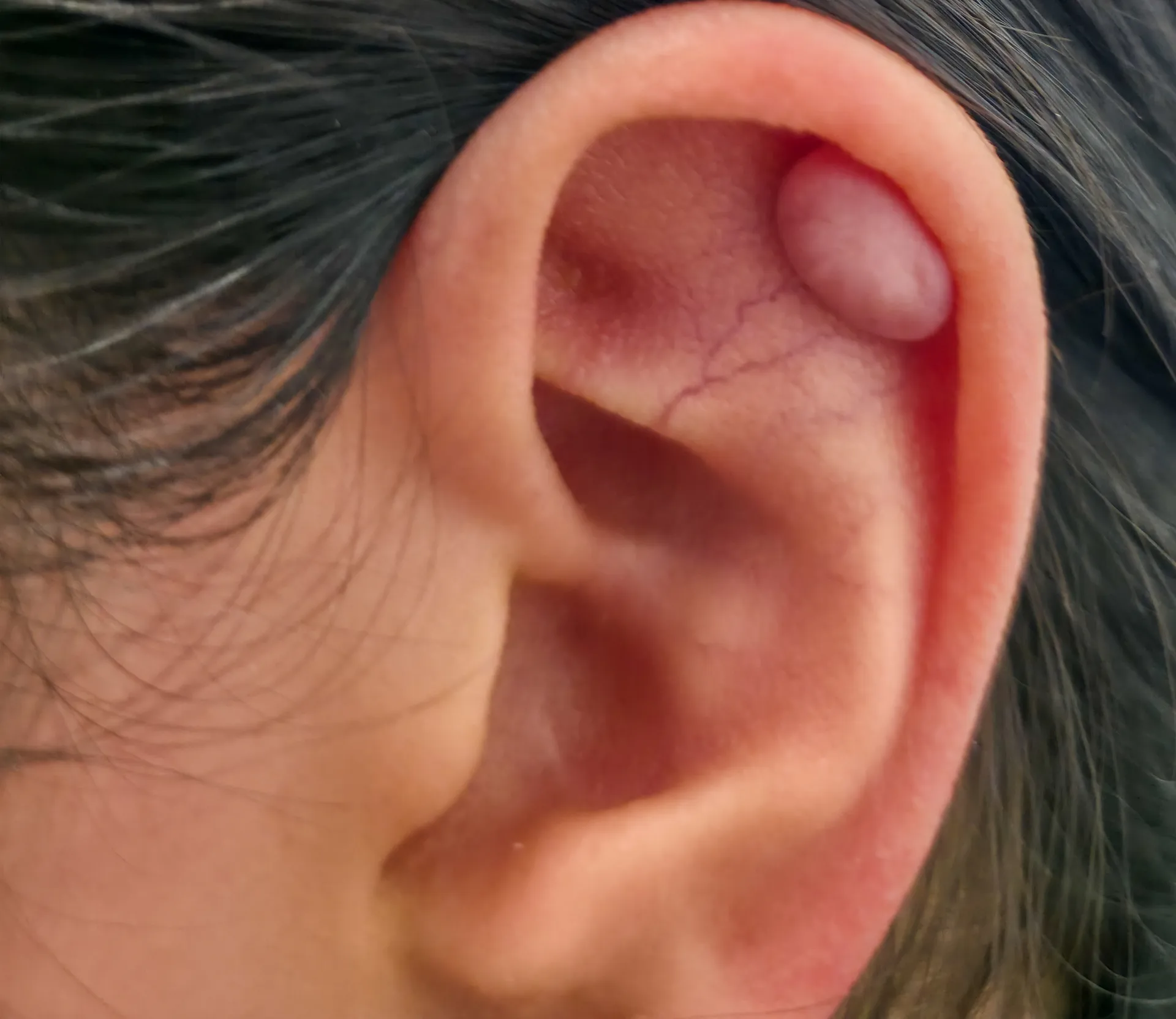
A keloid is a pathologic scar that grows beyond the boundaries of the original wound and continues to expand over time, in contrast to a hypertrophic scar, which is raised but stays within the wound boundary. Keloids most commonly occur on the earlobes (often after ear piercing), the chest and shoulders, the upper back, the jawline, and other areas where skin tension is high or where individual genetic predisposition is strong. They are more common in patients of African, Asian, and Hispanic descent, though anyone can develop one.
For Bellevue and Eastside patients, the practical clinical picture is this: surgical excision alone — without an adjunct protocol — has a recurrence rate that can exceed 50–80% depending on the keloid location, size, and patient factors. Modern keloid management treats the excision as one step in a multi-modality plan that also includes pre-operative and post-operative corticosteroid injections, pressure or silicone therapy after healing, and (for higher-risk locations and patients) post-operative low-dose radiation as an adjunct. Albert Yang, MD's approach in Bellevue mirrors this contemporary multi-modality framework. The conversation at consultation is candid: surgical excision is not a one-and-done event for keloid biology, and the patient must commit to the full protocol.
Ideal Candidates
Keloid removal in Bellevue is appropriate for patients who have a confirmed keloid (rather than a hypertrophic scar or another skin lesion), whose keloid is causing meaningful symptoms or functional or cosmetic concern, and who can commit to the full multi-modality protocol. Clear candidacy signals include:
- A scar that has grown beyond the boundaries of the original wound and has continued to enlarge over months or years
- Symptoms — itching, tenderness, episodic pain — that have not responded to conservative measures alone
- Cosmetic concern when the keloid is in a visible location (earlobe, jawline, chest, shoulder)
- Patient willingness to commit to the post-operative injection schedule and adjunct measures
- Reasonable understanding that recurrence is a real possibility despite best technique
Good candidates are in generally good health, do not smoke (or are willing to stop several weeks before and after surgery), and have realistic expectations about the protocol's structure and duration.
Keloid removal is not appropriate for every patient. Patients who are unwilling or unable to commit to the post-operative injection schedule are likely to see recurrence and are better served either by non-surgical management (intralesional steroids alone, silicone, pressure therapy) or by deferring surgery. Patients with very large or anatomically complex keloids may require a multidisciplinary plan that includes radiation oncology. Patients with active infection in the keloid require treatment of the infection first. The consultation in Bellevue is structured to identify the right plan honestly — including recommending non-surgical management when that is the better fit.
The Procedure & Technique
Keloid removal at the Bellevue practice is a multi-step program rather than a single operative event. The surgical excision is typically performed under local anesthesia in the clinic for small to moderate keloids; larger or anatomically complex cases may be performed under deep sedation or general anesthesia in a surgical facility. The surgical step itself typically takes 30 to 90 minutes, depending on size and complexity.
The contemporary protocol generally includes:
Pre-operative steroid injection. Many keloids are softened with one or more pre-operative intralesional corticosteroid injections in the weeks before surgery. This reduces the keloid's stiffness and prepares the surrounding tissue.
Surgical excision. The keloid is excised, with attention to wound geometry that minimizes skin tension at closure. For earlobe keloids, this often involves a careful core-out of the keloid with preservation of normal earlobe skin where possible. For jawline, chest, or shoulder keloids, the excision pattern is designed to align with relaxed skin tension lines wherever feasible.
Closure technique. Closure is meticulous and tension-minimizing. Layered closure, careful eversion of the wound edges, and selective use of fine sutures help reduce the mechanical stimulus that drives keloid recurrence.
Post-operative steroid injection schedule. A structured series of intralesional corticosteroid injections begins approximately 2 to 4 weeks after surgery and continues at intervals (typically 4–6 weeks apart) for several months. This is the single most important recurrence-prevention step.
Pressure or silicone therapy. After the wound has healed, silicone gel sheeting or pressure earrings (for earlobe keloids) are typically used for several months to mechanically discourage keloid recurrence.
Adjunct radiation (selective). For high-risk locations (chest, shoulder), high-recurrence-risk patients, or patients with prior recurrent keloids, post-operative low-dose radiation therapy can substantially reduce recurrence. Radiation is delivered by a radiation oncologist and is coordinated when indicated.
Albert Yang, MD's approach in Bellevue mirrors this contemporary multi-modality framework. The emphasis is on the full protocol — not the surgical excision alone — because recurrence prevention is the actual measure of success.
Considering Keloid Removal Bellevue in Bellevue?
Recovery & Timeline
Recovery from the surgical excision portion of keloid removal is generally well-tolerated; the longer arc of recurrence-prevention is the part that takes commitment. The general timeline most Bellevue and Eastside patients can plan around is:
- Day 0–3: Mild to moderate discomfort at the excision site. Bandage care and incision protection.
- Day 5–10: First post-op visit. Sutures may be removed. Most patients can manage normal daily activity.
- Day 14: Most patients return to all routine activity. Wound continues to mature.
- Week 3–4: First post-operative steroid injection (typically). The injection schedule continues at 4–6 week intervals for several months.
- Month 2–3: Silicone gel sheeting or pressure earring protocol typically begins (or continues, depending on location).
- Month 3–6: Active recurrence-watch window. Steroid injections continue at scheduled intervals. Any early signs of recurrence are addressed promptly.
- Month 6–12: Tapering of injection schedule. Continued pressure or silicone therapy.
- Year 1–2: Long-term monitoring. Most recurrences that are going to happen will appear within this window.
Bellevue patients are typically seen at 1 week, 2 weeks, 4 weeks, and then on a steroid-injection cadence (every 4–6 weeks) for the first 6 to 12 months. Long-term follow-up extends through year 2 and beyond.
 [ EXPECTED RESULTS ]
 Expected Results
A well-executed keloid removal program — surgical excision plus the full adjunct protocol — produces a flat, soft, well-healed scar that no longer grows, no longer causes symptoms, and is meaningfully less visible than the original keloid. Most patients experience substantial improvement, particularly when they commit to the full post-operative injection schedule and pressure therapy.
Honest framing on outcomes is important. Keloid biology is unforgiving, and even a perfectly executed protocol does not eliminate recurrence risk to zero. With contemporary multi-modality protocols, recurrence rates are typically substantially lower than excision alone — but not zero. The face will continue to be subject to the same individual genetic predisposition that produced the original keloid. The realistic expectation is meaningful improvement and durable management, not a guaranteed cure. Patients who develop early signs of recurrence are addressed promptly with intralesional steroid injections; most early recurrences can be managed without further surgery.
Keloid removal is a procedure-and-protocol, not a procedure alone. Patients seeking other scar-related care often combine the conversation with Scar Revision for hypertrophic or non-keloid scars, or Earlobe Repair when an earlobe keloid is associated with a tear or stretched piercing tract.
Risks & Considerations
Every surgical procedure carries risk, and keloid removal is no exception. Most complications are minor and manageable — but the central long-term risk of this procedure is recurrence, which deserves explicit acknowledgment. Possible risks include:
- Recurrence of the keloid — the defining long-term risk; minimized but not eliminated by adjunct steroid injection schedule, pressure or silicone therapy, and (when indicated) radiation
- Hypopigmentation or hyperpigmentation at the surgical site, particularly in patients with darker skin tones — common and typically improves over months
- Skin atrophy from intralesional steroid injections — uncommon at appropriate doses but possible, particularly with frequent or high-volume injections
- Telangiectasia (small dilated blood vessels) at the injection sites — uncommon
- Infection — uncommon with appropriate sterile technique
- Wound dehiscence — uncommon; can occur if mechanical tension is too high at closure
- Hypertrophic scarring — the scar may become hypertrophic without recurring as a true keloid; managed similarly with steroid injections and pressure therapy
- Anesthesia-related risks — discussed separately if the procedure is performed under sedation or general anesthesia
- Dissatisfaction with the aesthetic result — minimized by realistic expectations about the procedure-and-protocol nature of keloid management
Risk discussion is part of every keloid removal consultation in Bellevue. Dr. Yang's approach is to frame keloid management as a long-term partnership rather than a one-time surgery.
Questions about Keloid Removal Bellevue?
Talk with Dr. Yang.
Frequently Asked Questions
Will my keloid come back after removal?+
Recurrence is the central long-term risk of keloid removal. Surgical excision alone — without adjunct measures — has a recurrence rate that can exceed 50–80% depending on location, size, and patient factors. Modern multi-modality protocols (excision plus structured post-operative steroid injections, pressure or silicone therapy, and selective radiation) substantially reduce recurrence — but not to zero. The realistic expectation is meaningful improvement and durable management, with active monitoring for any early signs of recurrence.
How is a keloid different from a regular scar?+
A keloid grows beyond the boundaries of the original wound and continues to expand over months or years. A hypertrophic scar is raised but stays within the wound boundary and typically softens with time. Keloid behavior is the defining difference, and it changes the treatment approach — keloids require both excision and a recurrence-prevention protocol, while hypertrophic scars often respond to less intensive measures.
What does the post-operative injection schedule look like?+
A structured series of intralesional corticosteroid injections typically begins 2 to 4 weeks after surgery and continues at 4–6 week intervals for several months. The exact schedule is individualized based on keloid location, size, and the patient's response to each injection. Compliance with the schedule is the single biggest driver of long-term outcome.
Will I need radiation after keloid removal?+
Not always. For high-risk locations (chest, shoulder), high-recurrence-risk patients, or patients with prior recurrent keloids, post-operative low-dose radiation therapy can substantially reduce recurrence. Radiation is delivered by a radiation oncologist and is coordinated with the surgical plan when indicated. For many earlobe and lower-risk-site keloids, the steroid-injection-and-pressure protocol is sufficient.
Is keloid removal covered by insurance?+
This depends on the keloid's location, symptoms (functional impact, pain, drainage, infection), the insurance plan, and documentation. Some keloid removal — particularly when there is functional impact or chronic infection — qualifies for medical-necessity coverage; cosmetic-only cases typically do not. The practice's coordinator can help patients gather the documentation needed to inquire with their carrier.
When can I return to work after keloid removal?+
Most patients return to office-based, non-physical work within a few days of the surgical excision. The longer arc of post-operative care (steroid injections every 4–6 weeks, pressure or silicone therapy) does not require time off work — visits are short.
Can I have keloid removal if I have a family history of keloids?+
Yes — and the family history is important to mention at the consultation, because it raises the recurrence-risk profile and may shift the recommendation toward including post-operative radiation. A family history does not preclude surgery; it simply means the recurrence-prevention plan needs to be more aggressive.
Serving Bellevue & the Eastside
Bellevue+
The Bellevue practice is the home base for keloid removal across the Eastside. With a 0-minute drive time for in-city patients, the clinic at 15600 NE 8th St, Suite A-8 is convenient for the multi-month injection-and-monitoring protocol that defines keloid management. Bellevue patients can fit the regular 4–6 week steroid-injection visits into a normal schedule without disruption — which matters, because compliance with the injection schedule is the single biggest driver of long-term outcome.
Clyde Hill+
Clyde Hill patients reach the Bellevue clinic in approximately 5 to 8 minutes via Bellevue Way and 92nd Ave NE. The short drive matters most for keloid removal's months-long injection schedule — Clyde Hill patients can fit the 4–6 week visits into normal errand routines. The procedure itself is performed at the Bellevue clinic, with the post-operative injection program continuing for many months under Dr. Yang's care.
Medina+
Medina patients reach the Bellevue clinic in approximately 5 to 8 minutes via 84th Ave NE and Bellevue Way. The proximity is particularly valuable for keloid removal's structured injection schedule, which extends through the first 6 to 12 months post-operatively. Medina patients often combine injection visits with other downtown Bellevue errands. The keloid removal procedure itself is performed in Bellevue by Dr. Yang.
Issaquah+
Issaquah is approximately 15 to 20 minutes from the Bellevue clinic via I-90 — the longest regular drive among the practice's service areas. For Issaquah patients, the multi-month injection schedule is the planning conversation: visits are sized as short, focused appointments to make the cross-Eastside drive worthwhile, and they are scheduled with Issaquah commute patterns in mind. The keloid removal procedure itself is performed at the Bellevue clinic.
Mercer Island+
Mercer Island patients reach the Bellevue clinic in approximately 8 to 12 minutes via I-90 outside of rush hour. For Mercer Island patients undergoing keloid removal, the multi-month post-op injection cadence is the practical question — and the cross-bridge drive is short enough that the standing 4–6 week visits remain manageable. Where appropriate, virtual touchpoints between in-person injections (for wound check or pressure-therapy progress) reduce trip volume during the longer monitoring window.
Sammamish+
Sammamish patients reach the Bellevue clinic in approximately 12 to 18 minutes, depending on traffic on I-90 or SR-520. For Sammamish patients undergoing keloid removal, the multi-month injection schedule is the planning question — and the Bellevue practice schedules visits with Sammamish commute patterns in mind (typically late-morning or early-afternoon). Where appropriate, virtual touchpoints between in-person injections reduce drive volume during the long-tail keloid-monitoring window.
Redmond+
Redmond patients reach the Bellevue clinic in approximately 12 to 15 minutes via SR-520 or Bel-Red Rd. For Redmond patients undergoing keloid removal, mid-morning and early-afternoon appointment slots avoid the heaviest cross-Eastside commute and align well with the 4–6 week injection cadence. Many Redmond patients are working professionals who appreciate that the steroid-injection visits are short and don't require a full-day commitment.
Yarrow Point+
Yarrow Point sits 5 to 7 minutes from the Bellevue clinic — among the closest service areas. For Yarrow Point patients undergoing keloid removal, the geographic proximity is a meaningful logistical advantage during the multi-month post-op injection schedule that drives keloid recurrence prevention. Quick in-person visits for steroid injections fit easily into a Yarrow Point schedule, and Dr. Yang's boutique keloid removal program functions essentially as a neighborhood resource.
Hunts Point+
Hunts Point is approximately 5 to 7 minutes from the Bellevue clinic via SR-520 — one of the most convenient service areas for keloid removal's multi-month injection program. Hunts Point patients can typically come in for a quick steroid injection or progress check and be home within the hour. Dr. Yang's single-surgeon model means the same surgeon performs the original excision and conducts every follow-up injection — important for keloid monitoring, where pattern recognition over months matters.
Kirkland+
Kirkland patients reach the Bellevue clinic in approximately 12 to 15 minutes via I-405. For keloid removal, Kirkland patients often choose Dr. Yang specifically because they want a fellowship-trained surgeon committed to the full multi-modality protocol — not a single-procedure approach. The recurrence-prevention conversation is the differentiator. Recovery follow-ups and the multi-month injection schedule are arranged in-person at the Bellevue clinic.
Related Procedures
- Scar Revision — Surgical revision for hypertrophic and other non-keloid scars; the right procedure when the scar is not actually a keloid.
Scar Revision
Surgical revision for hypertrophic and other non-keloid scars; the right procedure when the scar is not actually a keloid.
Earlobe Repair
Often combined with keloid removal when an earlobe keloid is associated with a torn or stretched piercing tract.
Face procedures
The full category of facial surgical procedures performed at the Bellevue practice.